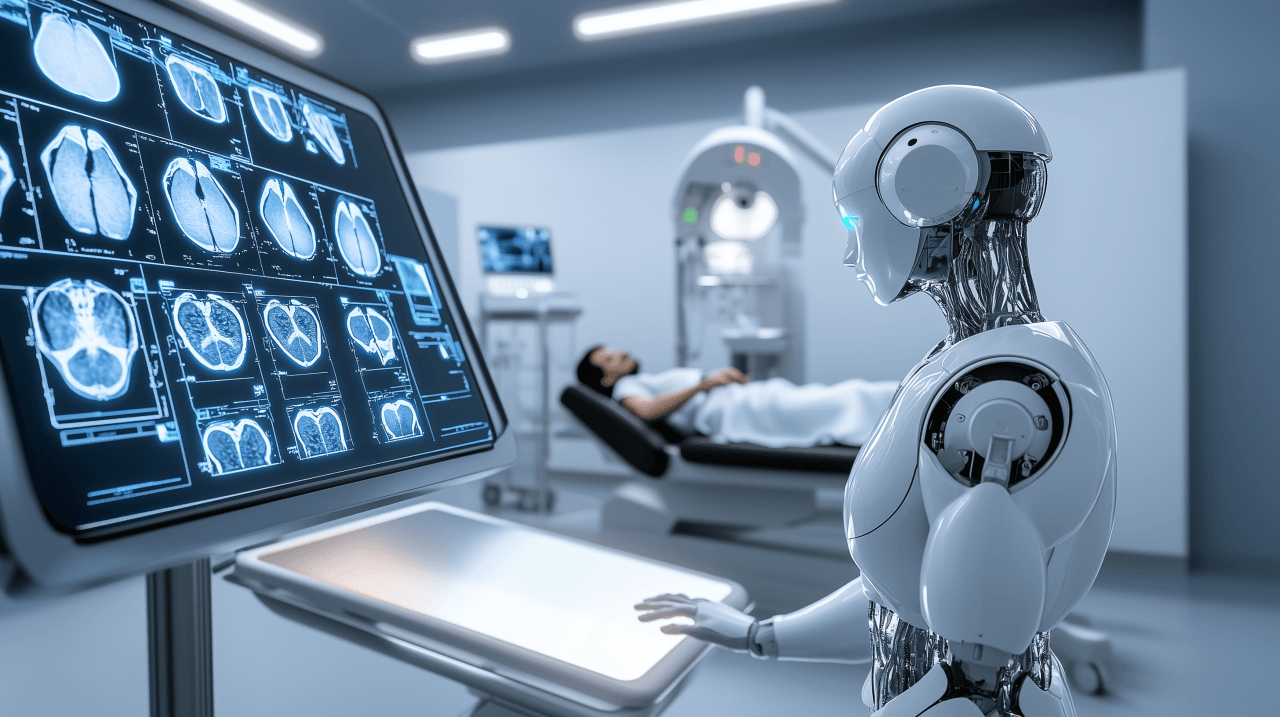
Executive Summary
Artificial Intelligence in healthcare is no longer a futuristic concept. In 2026, AI-powered systems are actively assisting in medical diagnosis, predicting patient outcomes, and transforming healthcare delivery worldwide.
This article explores the real-world applications of AI in medicine today, the tangible benefits being realized, and the critical ethical challenges that healthcare systems must address as AI becomes increasingly integrated into clinical practice.
What Is AI in Healthcare 2026?
AI in healthcare refers to sophisticated computer systems that analyze medical data, learn patterns, and support clinical decision-making. These systems leverage:
Core AI Technologies in Medicine:
Pattern recognition from medical data
Medical imaging and scan analysis
Clinical note analysis and documentation
Patient outcome prediction and risk assessment
Key Insight: AI in 2026 healthcare does NOT replace doctors. Instead, it serves as a powerful diagnostic assistant and decision-support tool.
How AI Is Diagnosing Diseases in 2026
1. Medical Imaging & Early Detection
AI-powered analysis of medical scans
AI Can Detect:
- 🎯Breast Cancer
Early-stage detection from mammograms
- 🎯Lung Cancer
CT scan analysis with 94% accuracy
- 🎯Brain Tumors
MRI analysis and classification
- 🎯Heart Conditions
Echocardiogram and ECG analysis
Impact Statistics (2026):
"AI can identify patterns invisible to the human eye, particularly in early disease stages."
2. AI in Pathology & Lab Analysis
Automated analysis of laboratory samples
AI systems now analyze blood tests, biopsy slides, and genetic data with unprecedented accuracy. They identify abnormal cells, predict disease progression, and reduce human error in laboratory environments.
"Pathology AI reduces diagnostic time from days to hours while maintaining 99.2% accuracy in cancer cell identification."
3. Symptom Checkers & Virtual Health Assistants
AI-powered patient triage and preliminary diagnosis
Key Applications:
- 📱Symptom Analysis
24/7 preliminary assessment
- 🏥Emergency Triage
Urgency level determination
- 🌍Remote Healthcare
Support for underserved regions
2026 Adoption Rate:
68%
of major healthcare providers use AI triage systems
Predicting Patient Outcomes with AI in 2026
From Reactive to Predictive Healthcare
AI transforms healthcare from treating diseases to preventing them by predicting patient outcomes before they manifest clinically.
Risk Prediction & Preventive Care
AI analyzes comprehensive patient data to predict:
- ❤️Heart attack/stroke risk (next 6 months)
- 🩺Diabetes complication likelihood
- 📅Hospital readmission probability
Personalized Treatment Plans
AI creates customized treatment protocols
Based on analysis of thousands of similar patient cases, AI recommends optimal treatment combinations for individual patients, considering their unique genetics, lifestyle, and medical history.
ICU & Emergency Care AI Support
Real-time monitoring and early warning systems
Sepsis Prediction
Detects signs 6-8 hours before clinical symptoms
Respiratory Failure
Predicts deterioration in ventilated patients
Cardiac Events
Identifies at-risk patients in real-time
Real-World Benefits of AI in Healthcare 2026
Faster Diagnosis
Reduces diagnostic time by up to 70% through automated analysis.
Improved Accuracy
Reduces diagnostic errors by 45% compared to human-only assessment.
Cost Reduction
Saves healthcare systems $150B annually through early intervention.
Better Access
Extends specialist-level diagnosis to remote and underserved areas.
Reduced Workload
Automates 30% of repetitive tasks, allowing focus on complex cases.
Data-Driven Decisions
Provides evidence-based recommendations backed by millions of cases.
Ethical Challenges of AI in Healthcare (2026)
Despite Benefits, Critical Ethical Issues Remain
1. Data Privacy & Security
Protecting sensitive health information in AI systems
Critical Concerns:
- •Data Ownership: Who controls patient health data?
- •Security Risks: Vulnerability to cyber attacks on medical AI
- •Consent Complexity: Informed consent for AI data usage
"In 2026, healthcare data breaches affecting AI systems increased by 78%, highlighting the urgent need for stronger security frameworks."
2. Bias & Algorithmic Fairness
AI systems inheriting and amplifying human biases
Documented Biases:
Racial Disparities
Diagnostic AI less accurate for darker skin tones
Gender Bias
Under-diagnosis of heart disease in women
Socioeconomic Bias
AI trained primarily on data from wealthy nations
Root Cause:
AI learns from historical data containing human biases
If training data lacks diversity or contains historical discrimination, AI systems perpetuate and sometimes amplify these biases.
3. Black Box Problem
Lack of transparency in AI decision-making
Many advanced AI models cannot explain why they reached a particular diagnosis or recommendation. This creates trust issues and legal challenges.
"When an AI recommends a life-altering treatment, doctors and patients deserve to understand the reasoning behind that decision."
4. Accountability & Responsibility
Legal and ethical responsibility for AI decisions
When AI Makes an Error:
The Doctor?
The Hospital?
The AI Developer?
Current legal frameworks struggle to assign responsibility for AI-assisted medical errors, creating liability gaps that need urgent resolution.
Addressing Ethical Challenges in 2026
Healthcare systems are implementing multi-layered approaches to ensure responsible AI adoption.
Human-in-the-Loop Systems
All critical AI recommendations require human verification before implementation.
Explainable AI (XAI)
Development of transparent AI models that can explain their reasoning.
Diverse Training Data
Intentional inclusion of diverse patient populations in AI training datasets.
Regulatory Frameworks
New regulations requiring AI validation, monitoring, and ethical audits.
The Future of Healthcare AI (Beyond 2026)
Where Healthcare AI is Headed
Near-Term (2026-2030):
- 🧬AI-integrated genomic medicine
- 📱Wearable AI health monitors
- 🌐Global AI health networks
Long-Term Vision:
"The ultimate goal is not AI that replaces doctors, but AI that augments human medical expertise to provide universal, personalized, and preventive healthcare for all."
Final Takeaway
AI in healthcare 2026 represents a transformative shift in medicine, offering unprecedented capabilities in diagnosis, prediction, and personalization.
The critical challenge is not technological advancement
It's ethical implementation.
The future of healthcare AI depends on balancing technological innovation with human values, ethical frameworks, and patient-centered care.