What Is a Test Case in Software Testing?
TechnoSAi • 25-Dec-2025
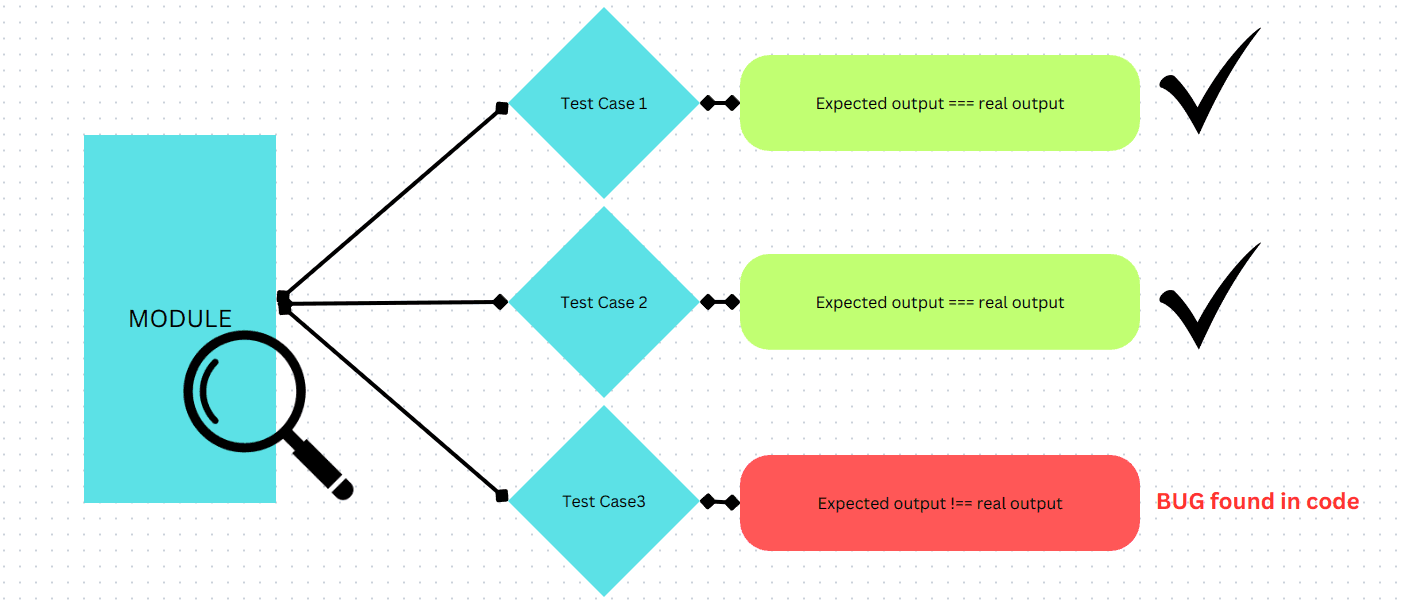
In modern software development, writing code is only half the work. The real challenge is ensuring that the code functions correctly in real-world scenarios. This is where software testing becomes essential. At the core of every effective testing process, especially in JavaScript applications lies a fundamental concept known as the test case, which helps verify that software behaves exactly as expected.
Whether you are learning JavaScript, building modern web applications, or preparing for technical interviews, having a clear understanding of what a test case is, and how it applies to real world JavaScript development, is absolutely essential for writing reliable, high-quality software.
In this article, you will gain an in-depth understanding of test cases in software testing, with a special focus on JavaScript based applications. We will walk through the topic step by step, starting with basic definitions, then exploring real-world JavaScript examples, automated testing approaches, industry best practices, and common mistakes to avoid, so you can confidently apply test cases in real projects and interviews.
1. Introduction to Software Testing
Software testing is the process of **evaluating a software application** to determine whether it meets the specified requirements and works correctly under different conditions.
Testing helps answer important questions like:
- •Does the application behave as expected?
- •Does it handle incorrect inputs safely?
- •Will new changes break existing functionality?
- •Is the system reliable and user-friendly?
Why Testing is Critical for JavaScript Applications
In JavaScript-based applications—such as websites, APIs, backend services, and mobile apps—testing is especially important because:
- ⚡JavaScript is dynamically typed
- ⚡Applications often involve asynchronous behavior
- ⚡Small bugs can easily cause runtime errors
2. What Is a Test Case?
Simple Definition
A **test case** is a **set of instructions, inputs, and expected results** used to verify that a specific feature or functionality of a software application works correctly.
In simple words:
A test case tells you what to test, how to test it, and what result to expect.
If the actual result matches the expected result, the test case passes.
If not, it fails.
Formal Definition
In software engineering terms:A test case is a documented specification that defines the conditions, inputs, actions, and expected outputs required to verify a particular functionality of a software system.
3. Why Test Cases Are Important in JavaScript Development
JavaScript applications often run in unpredictable environments:
Unpredictable Environments
- • Different browsers
- • Different devices
- • Different network conditions
- • Different user behaviors
Test Cases Ensure
- • Correct functionality
- • Code reliability
- • Bug prevention
- • Safe refactoring
- • Better user experience
Without Test Cases:
- ⚠Bugs reach production
- ⚠Fixes break existing features
- ⚠Developers lose confidence in changes
- ⚠Maintenance becomes difficult
4. Key Components of a Test Case
A professional test case usually contains the following elements:
Test Case ID
A unique identifier used to track the test case.
TC_JS_LOGIN_001Test Case Title
A short, clear description of what is being tested.
Verify login with valid credentialsPreconditions
Conditions that must be true before executing the test.
- • User must be registered
- • Application must be running
Test Steps
Step-by-step actions to execute the test.
- Open login page
- Enter valid email
- Enter valid password
- Click Login button
5. Test Case vs Test Scenario
⚠ This is a very common interview question.
Test Scenario
- •High-level description
- •Describes what to test
- •Less detailed
Verify user login functionality
Test Case
- •Detailed and step-by-step
- •Describes how to test
- •Includes inputs and expected outputs
Verify login with valid email and password
In short: Test scenario = idea • Test case = execution
7. Test Cases for JavaScript Functions
JavaScript functions are ideal candidates for test cases.
Function Example
function isEven(number) {
  return number % 2 === 0;
}
Test Cases
| Input | Expected Output |
|---|---|
isEven(4) | true |
isEven(7) | false |
isEven(0) | true |
isEven(-2) | true |
Each row represents a test case.
8. Automated Test Cases in JavaScript
Manual testing is useful, but automation saves time and ensures consistency.
Automated test cases:
- ✓Are written as code
- ✓Can be executed repeatedly
- ✓Catch regressions early
Example Using Jest
describe("isEven function", () => {
  test("returns true for even numbers", () => {
    expect(isEven(4)).toBe(true);
  });

  test("returns false for odd numbers", () => {
    expect(isEven(7)).toBe(false);
  });
});
Each test() block represents a test case.
9. Types of Test Cases in Software Testing
Functional Test Cases
Verify core functionality.
- • Button click
- • API response
- • Form submission
Negative Test Cases
Check how the system handles invalid inputs.
- • Empty fields
- • Wrong password
- • Invalid email
Boundary Test Cases
Test edge values.
- • Minimum password length
- • Maximum input size
UI Test Cases
Verify visual elements and user interactions.
- • Button visibility
- • Error message alignment
11. Best Practices for Writing Test Cases
Keep Test Cases Simple
Avoid unnecessary complexity.
Use Clear Naming
Test case titles should clearly describe intent.
Test One Thing at a Time
Each test case should validate only one behavior.
Cover Edge Cases
Don't test only happy paths.
Maintain Test Cases
Update them when requirements change.
14. Interview Perspective: How to Explain a Test Case
A strong interview answer:
"A test case is a detailed set of conditions, inputs, and expected outputs used to verify that a software feature works correctly. In JavaScript applications, test cases help validate functions, UI interactions, and APIs to ensure reliability and prevent bugs."
15. Final Thoughts
A test case is not just a document or a piece of code—it is a safety net for your application.
For JavaScript developers, understanding test cases means:
Whether you are working with vanilla JavaScript, React, Node.js, or any modern JavaScript framework, mastering test cases is a skill that will benefit you throughout your career.